
Many adults reach a point where they begin to wonder:
“Could ADHD explain what I’ve been experiencing?”
If you’ve been struggling with focus, organization, or follow-through, you may have considered booking an ADHD assessment — but felt unsure about what the process actually involves.
That uncertainty is completely normal.
For many people, the idea of being assessed can feel unclear or even overwhelming.
What will they ask?
How long will it take?
What happens afterward?
If you’ve had these questions, you’re not alone.
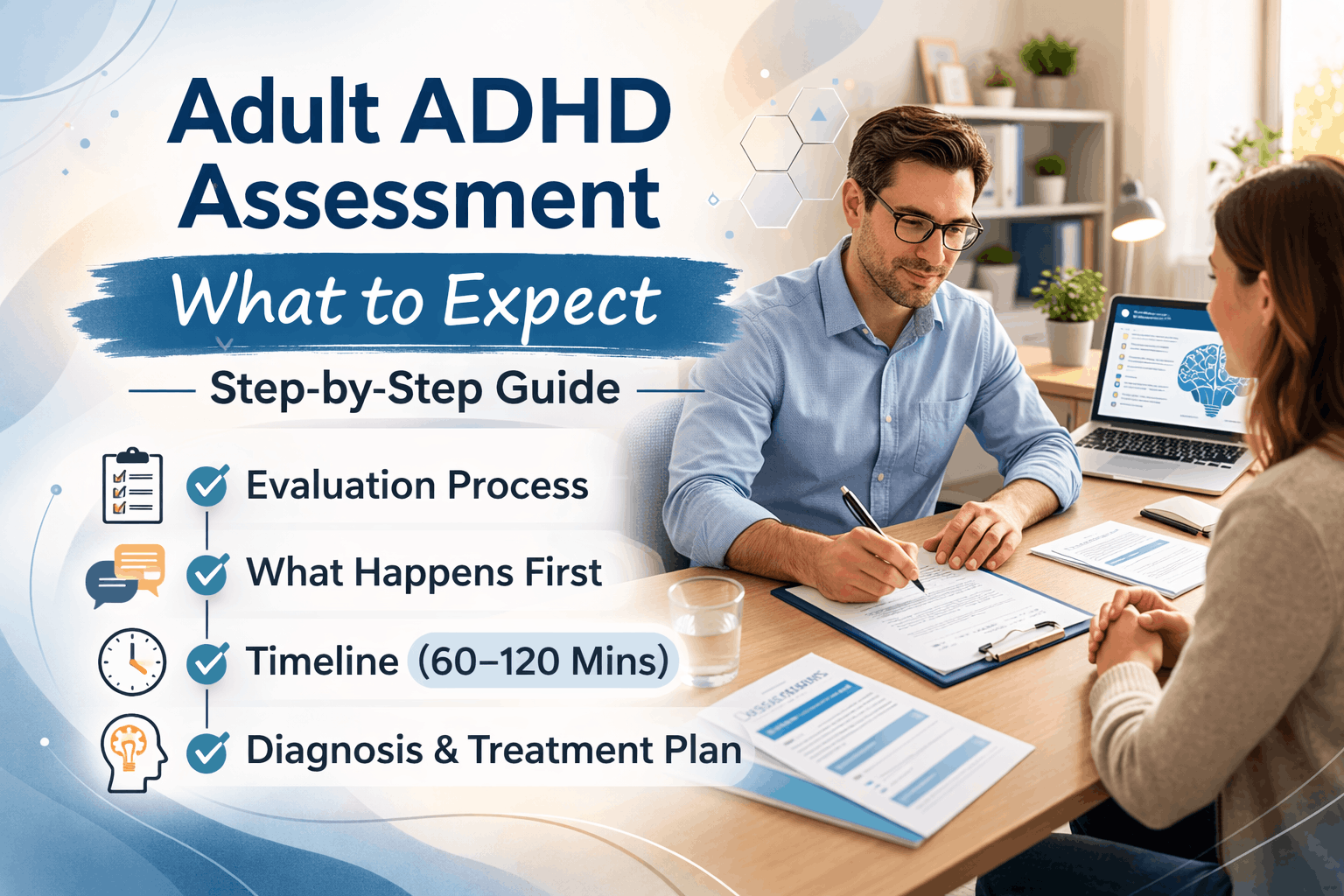
This guide will walk you through the adult ADHD assessment process step by step, so you know exactly what to expect.
What Is an ADHD Assessment?
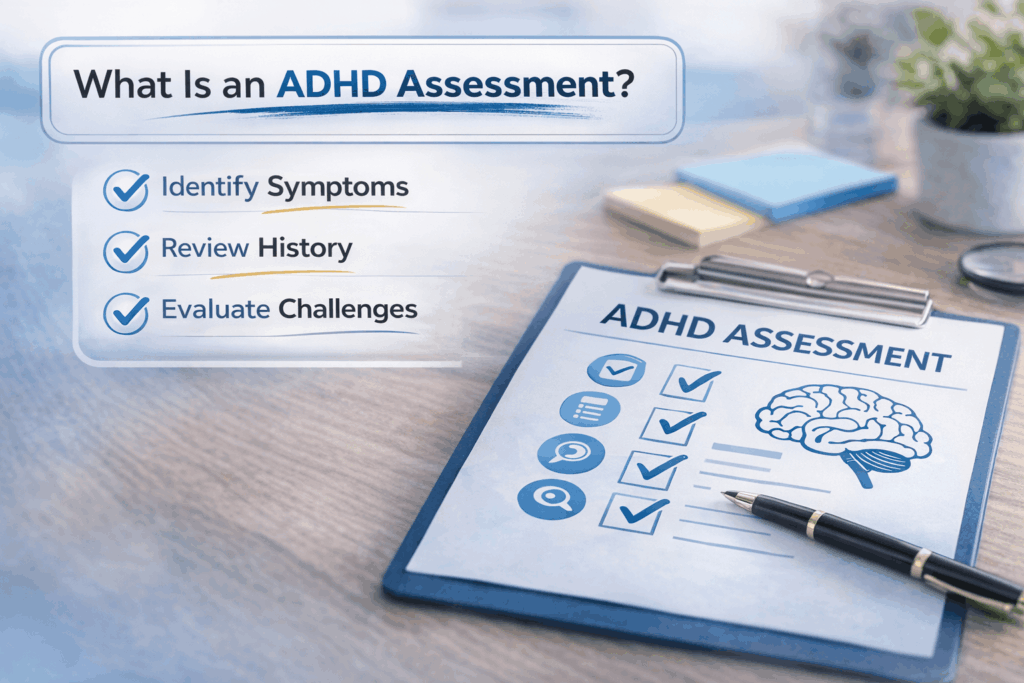
An ADHD assessment is a structured and comprehensive evaluation used to determine whether ADHD may be contributing to the challenges you’re experiencing.
It’s not a quick test or a single questionnaire.
Instead, it’s a detailed clinical process that looks at:
your current symptoms
your personal and developmental history
how symptoms affect your daily life
whether other conditions may also be contributing
The goal isn’t just to provide a diagnosis — it’s to give you clarity, understanding, and a path forward.
Who Should Consider an ADHD Assessment?
You may benefit from an adult ADHD assessment if you’ve experienced ongoing challenges such as:
difficulty focusing or staying on task
chronic procrastination
disorganization at home or work
trouble managing time or meeting deadlines
feeling overwhelmed by everyday responsibilities
Many adults seeking an ADHD diagnosis describe these patterns as long-standing — often present since childhood, even if they were never formally recognized.
You might find yourself thinking:
“Why do things that seem simple for others feel so difficult for me?”
If that resonates, an assessment can help provide meaningful answers.
What Happens During an ADHD Assessment at Lynch NP Services?
One of the most common concerns people have is:
“What will actually happen during the assessment?”
At Lynch NP Services, the ADHD assessment process is structured, thorough, and designed to help you feel prepared and supported from the start.
1. Pre-Assessment Screening and Forms
Before your appointment, you’ll receive a series of screening tools and intake forms.
These play an important role in the assessment and help:
gather detailed information about your symptoms
identify patterns in attention, focus, and organization
guide the direction of the clinical interview
Completing these in advance allows your appointment to be more focused, efficient, and personalized to your experience.
2. Comprehensive Clinical Consultation
Your ADHD assessment includes a detailed, one-on-one consultation.
This typically takes 60 to 120 minutes (1 to 2 hours), depending on your history and the level of detail discussed.
During this time, we explore several important areas.
Symptom Review
You’ll be asked structured questions about:
attention and concentration
organization and task management
procrastination and follow-through
restlessness or mental activity
This helps identify patterns consistent with adult ADHD symptoms.
Personal and Developmental History
A key part of the ADHD evaluation process is understanding your history over time.
We’ll explore:
school experiences and early challenges
academic and work patterns
long-standing difficulties with focus or organization
coping strategies you may have developed
This helps determine whether these patterns have been present across different stages of life.
Functional Impact
We also look at how symptoms affect your day-to-day life, including:
work performance
relationships
daily responsibilities
stress and overall functioning
This ensures the assessment reflects your real-world experience, not just a checklist of symptoms.
Screening for Other Conditions
Because ADHD can overlap with other conditions, we also assess for:
anxiety
depression
stress or burnout
This step is important to ensure a thorough and accurate diagnosis, and to identify any additional factors that may be contributing to your symptoms.

3. Clinical Assessment and Diagnosis
After reviewing all of this information, we determine whether your symptoms meet the criteria for ADHD.
If a diagnosis is appropriate, you will receive:
a clear explanation of the diagnosis
insight into how ADHD affects you specifically
the opportunity to ask questions and discuss next steps
The goal is to leave you with a clear understanding of what’s going on — not confusion or uncertainty.
What Happens After an ADHD Diagnosis?
If ADHD is diagnosed, the next step is developing a personalized treatment plan.
This may include:
education about ADHD and how it affects daily functioning
practical strategies to improve focus, organization, and productivity
discussion of treatment options, including medication if appropriate
follow-up care and ongoing support
For many individuals, this is a significant turning point.
It often brings:
clarity around long-standing challenges
validation of their experiences
a structured path forward
Getting Started with an ADHD Assessment
Taking the first step toward an ADHD assessment can feel like a big decision — especially if you’ve been managing these challenges on your own for a long time.
But for many adults, this process provides something they’ve been missing for years: clarity.
Lynch NP Services provides comprehensive ADHD assessments across Ontario, with a structured and supportive approach designed to help you understand your symptoms and move forward with confidence.
If you’re ready to take the next step:
Book your ADHD assessment through our online portal